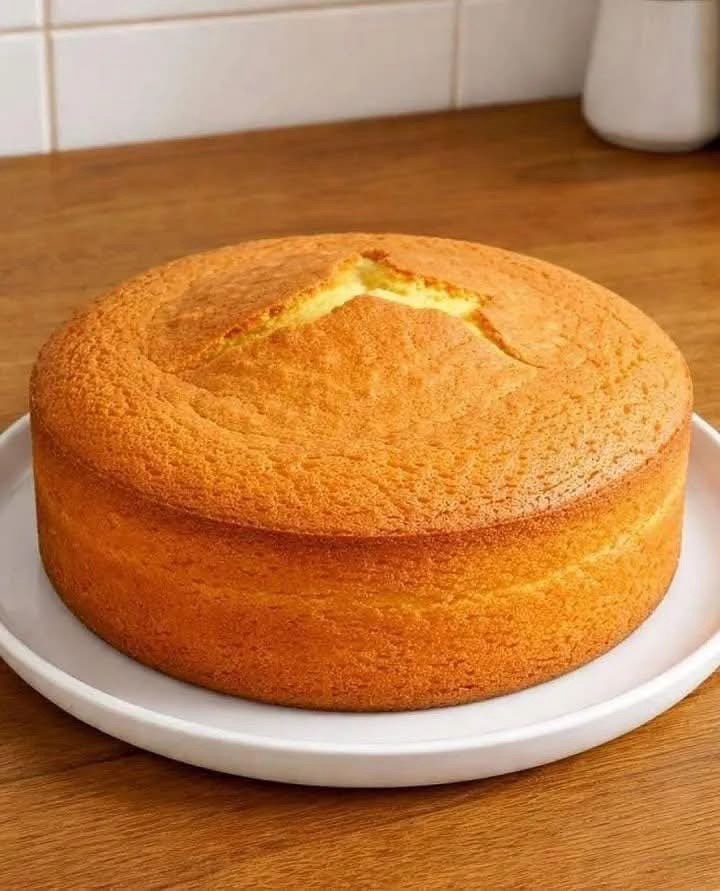
SOFT, TALL & BUTTERY — THE PERFECT VANILLA CAKE
If you are searching for a soft vanilla cake that is tall, fluffy, buttery, tender, and packed with classic vanilla flavor, this is the recipe to keep. It has the kind of delicate crumb that feels light when you bite into it while still having enough structure to layer, frost, and decorate.
This homemade vanilla cake is simple enough for a beginner baker but special enough for birthdays, holidays, afternoon tea, family celebrations, and weekend desserts. The flavor is familiar and comforting, while the texture makes it feel like something from a professional bakery.
The secret to a beautifully soft cake is not complicated. It comes down to using properly softened butter, incorporating the ingredients carefully, avoiding overmixing, and baking the cake just until it is done. Once you understand these simple techniques, making a tall vanilla cake at home becomes much easier.
Serve the cake plain with a dusting of powdered sugar, cover it with vanilla buttercream, fill it with jam and whipped cream, or turn it into an impressive layer cake. This recipe gives you a versatile vanilla foundation that works with countless toppings and fillings.
WHY YOU’LL LOVE THIS SOFT VANILLA CAKE
- Soft and tender crumb: Every bite is delicate without being fragile.
- Tall appearance: The batter rises beautifully when baked correctly.
- Rich buttery flavor: Butter gives the cake a classic homemade taste.
- Strong vanilla flavor: Vanilla extract or vanilla bean paste creates a warm, aromatic finish.
- Easy ingredients: Most ingredients are everyday baking staples.
- Versatile: Use it for birthdays, layer cakes, cupcakes, or simple afternoon desserts.
- Beginner-friendly: The method is straightforward and does not require complicated techniques.
- Beautiful texture: The crumb is fluffy enough for snacking but sturdy enough for frosting.
WHAT MAKES A VANILLA CAKE SOFT AND TALL?
A great vanilla cake needs the right balance of structure, fat, liquid, and leavening.
Butter provides richness and helps create the tender texture. Eggs provide structure and help the cake rise. Milk adds moisture and helps create a delicate crumb. Baking powder provides lift, while properly creaming the butter and sugar incorporates air into the batter.
The mixing technique matters just as much as the ingredients. Butter should be softened enough to become creamy, but it should not be melted. The flour should be incorporated gently, and the batter should not be mixed longer than necessary.
For a tall cake, the pan size also matters. Using a pan that is too large can produce a shorter cake, while the correct pan helps the batter rise upward rather than spreading too widely.
RECIPE AT A GLANCE
- Prep Time: 20 minutes
- Cook Time: 35–45 minutes
- Total Time: About 1 hour
- Servings: 10–12
- Difficulty: Easy to moderate
- Oven Temperature: 350°F (175°C)
INGREDIENTS
- 2 1/2 cups all-purpose flour
- 2 1/2 teaspoons baking powder
- 1/2 teaspoon salt
- 1 cup unsalted butter, softened
- 1 3/4 cups granulated sugar
- 4 large eggs, room temperature
- 2 teaspoons pure vanilla extract
- 1 cup whole milk, room temperature
OPTIONAL INGREDIENTS FOR EXTRA VANILLA FLAVOR
- 1 tablespoon vanilla bean paste
- 1 teaspoon finely grated vanilla sugar
Vanilla bean paste can be used in place of some or all of the vanilla extract if you want a stronger vanilla aroma and visible vanilla flecks throughout the cake.
INGREDIENT NOTES
ALL-PURPOSE FLOUR
All-purpose flour provides enough structure for a tall cake while keeping the crumb tender.
Measure flour carefully. Too much flour can make the cake dense and dry. The most accurate method is to weigh the flour with a kitchen scale. If measuring with cups, spoon the flour into the measuring cup and level the top rather than scooping directly from the flour container.
UNSALTED BUTTER
Butter provides the rich flavor that defines this buttery vanilla cake.
Use softened butter rather than melted butter. Properly softened butter should be easy to press with a finger but should still hold its shape.
GRANULATED SUGAR
Sugar adds sweetness, contributes moisture, and helps create a tender crumb.
EGGS
Room-temperature eggs blend more easily with the butter mixture and help create a smooth batter.
MILK
Whole milk adds moisture and richness. Room-temperature milk is preferable because it combines more smoothly with the other ingredients.
VANILLA
Vanilla is the defining flavor of this cake, so use a good-quality pure vanilla extract or vanilla bean paste when possible.
HOW TO MAKE THE PERFECT VANILLA CAKE
STEP 1: PREPARE THE OVEN
Preheat your oven to 350°F (175°C).
Allow the oven to fully preheat before putting the cake inside. A properly heated oven helps the cake rise evenly from the beginning of baking.
STEP 2: PREPARE THE CAKE PAN
Grease a deep 9-inch round cake pan or two 8-inch round cake pans, depending on the desired shape.
Line the bottom with parchment paper and lightly grease the parchment.
If you want a particularly tall cake, make sure the pan has enough depth to safely accommodate the rising batter.
STEP 3: COMBINE THE DRY INGREDIENTS
In a medium bowl, whisk together the flour, baking powder, and salt.
Mixing these ingredients separately helps distribute the baking powder evenly throughout the flour.
STEP 4: CREAM THE BUTTER AND SUGAR
Place the softened butter in a large mixing bowl.
Beat the butter until smooth and creamy.
Gradually add the sugar and continue beating for approximately 3–5 minutes.
The mixture should become noticeably lighter in color and fluffy in texture.
This step is important because the mixing process incorporates tiny air bubbles into the butter. Those air bubbles help contribute to the cake’s light texture.
STEP 5: ADD THE EGGS
Add the eggs one at a time, mixing well after each addition.
Scrape down the sides of the bowl as needed.
If the mixture looks slightly curdled at this stage, do not panic. The batter can still come together once the dry ingredients and milk are incorporated.
STEP 6: ADD THE VANILLA
Mix in the vanilla extract or vanilla bean paste.
For a stronger vanilla cake, you can use a combination of vanilla extract and vanilla bean paste.
STEP 7: ALTERNATE FLOUR AND MILK
Add approximately one-third of the dry ingredients to the butter mixture and mix gently.
Add about half of the milk and mix again.
Continue alternating the dry ingredients and milk, finishing with the remaining flour mixture.
Mix only until the batter is combined.
Do not overmix once the flour has been added. Excessive mixing can develop gluten and produce a tougher cake.
STEP 8: TRANSFER THE BATTER TO THE PAN
Pour the batter into the prepared cake pan.
Use a spatula to gently spread the batter into an even layer.
Tap the pan very lightly against the counter once or twice to release any unusually large air pockets, but avoid aggressively banging the pan.
STEP 9: BAKE
Place the cake in the center of the preheated oven.
Bake at 350°F (175°C) for approximately 35–45 minutes, depending on the pan size and your oven.
Begin checking toward the lower end of the baking time.
The cake is ready when the top is lightly golden, the center springs back when gently pressed, and a toothpick inserted into the center comes out clean or with a few moist crumbs.
STEP 10: COOL
Remove the cake from the oven and allow it to cool in the pan for approximately 10–15 minutes.
Run a thin knife carefully around the edge if necessary.
Turn the cake onto a cooling rack and remove the parchment paper.
Allow it to cool completely before frosting.
WHY ROOM-TEMPERATURE INGREDIENTS MATTER
Room-temperature ingredients help create a smoother and more uniform batter.
Cold eggs and milk can cause softened butter to firm up suddenly, resulting in a less cohesive mixture.
For best results, allow the butter, eggs, and milk to sit at room temperature before beginning.
Do not leave perishable ingredients at room temperature for excessive periods. A short period of warming is generally sufficient.
HOW TO SOFTEN BUTTER PROPERLY
The butter should be soft enough to cream with sugar but not melted or greasy.
If your butter is refrigerated, cut it into small cubes and leave it at room temperature for a short period.
You can also gently flatten the pieces with a rolling pin to speed up softening.
Avoid microwaving the butter until melted because melted butter changes the structure of a traditional creamed butter cake.
THE IMPORTANCE OF CREAMING BUTTER AND SUGAR
Do not rush this step.
When butter and sugar are beaten together, the sugar creates tiny air pockets within the butter. These pockets expand during baking and contribute to the cake’s rise.
A properly creamed mixture should look lighter and fluffier than the original butter.
This is one of the most important techniques for achieving a soft, tall, fluffy vanilla cake.
HOW TO PREVENT A DENSE VANILLA CAKE
- Use fresh baking powder.
- Measure flour accurately.
- Use softened rather than melted butter.
- Cream the butter and sugar thoroughly.
- Use room-temperature eggs and milk.
- Do not overmix the batter.
- Do not open the oven repeatedly while the cake is rising.
- Make sure your oven temperature is accurate.
HOW TO MAKE THE CAKE EXTRA TALL
If your goal is a particularly tall vanilla cake, use a smaller, deeper pan or divide the batter between appropriately sized smaller pans for a layered cake.
Do not overfill the cake pan. Batter should generally occupy no more than about two-thirds of the pan’s height before baking.
For a dramatic layer cake, baking two or three layers separately often produces a more even result than trying to bake one extremely deep cake.
HOW TO GET A FLAT CAKE TOP
For layer cakes, a flat top makes stacking and frosting much easier.
Use evenly distributed batter and avoid placing the pan too close to the top or bottom heating element.
If the cake develops a dome, allow it to cool completely and carefully level the top with a serrated knife.
Another option is to use cake strips around the pan, which can help encourage more even baking.
HOW TO GET A MOIST VANILLA CAKE
Moisture comes from the correct balance of butter, milk, eggs, and sugar, but baking time is equally important.
Overbaking is one of the most common causes of dry cake.
Start checking the cake before the maximum suggested baking time. Once a toothpick comes out clean or with a few moist crumbs, remove the cake from the oven.
HOW TO KNOW WHEN VANILLA CAKE IS DONE
There are several useful signs.
- The top is lightly golden.
- The edges begin to pull slightly away from the pan.
- The center springs back gently when touched.
- A toothpick inserted into the center comes out clean or with a few moist crumbs.
Do not rely on color alone. The center is the most important area to check.
COMMON VANILLA CAKE MISTAKES
MEASURING TOO MUCH FLOUR
Too much flour can make the cake dry and heavy.
Use a kitchen scale whenever possible, or use the spoon-and-level method when measuring by volume.
USING COLD BUTTER
Cold butter does not cream properly with sugar.
This can reduce the amount of air incorporated into the batter and affect the cake’s texture.
OVERMIXING
Once flour is added, mix only until the ingredients are incorporated.
Overmixing can develop gluten and make the cake tougher.
OVERBAKING
Even a well-formulated cake can become dry if left in the oven too long.
Begin checking early and remove the cake as soon as it is properly baked.
OPENING THE OVEN TOO OFTEN
Opening the oven door repeatedly can cause temperature fluctuations while the cake is rising.
Try to keep the oven closed during the early stages of baking.
VANILLA CAKE FROSTING IDEAS
This classic vanilla cake works with almost any frosting.
- Classic vanilla buttercream
- Swiss meringue buttercream
- Whipped cream frosting
- Cream cheese frosting
- Chocolate buttercream
- Strawberry buttercream
- Caramel frosting
- Fresh whipped cream and berries
CLASSIC VANILLA BUTTERCREAM
For a traditional birthday cake, pair the vanilla layers with a simple vanilla buttercream.
Beat softened butter until creamy, gradually add powdered sugar, then add vanilla and enough milk or cream to reach your preferred consistency.
Spread the frosting between the layers, cover the sides, and decorate the top with piped swirls or simple sprinkles.
VANILLA CAKE WITH FRESH BERRIES
For a lighter dessert, serve slices of vanilla cake with fresh strawberries, blueberries, raspberries, and softly whipped cream.
The natural acidity of berries balances the richness of the buttery cake.
VANILLA AND STRAWBERRY LAYER CAKE
Slice the cake into layers and spread strawberry jam or strawberry preserves between them.
Add vanilla buttercream or whipped cream, then decorate with fresh strawberries.
This combination is especially attractive for spring and summer celebrations.
VANILLA AND CHOCOLATE CAKE
Pair the vanilla cake with chocolate frosting for a classic flavor combination.
You can also add a thin layer of chocolate ganache between the cake layers for a richer dessert.
VANILLA CARAMEL CAKE
Add a layer of caramel sauce between vanilla cake layers and finish with vanilla or caramel buttercream.
For a simple decoration, drizzle additional caramel over the top just before serving.
SIMPLE POWDERED SUGAR VERSION
You do not need frosting to enjoy this cake.
Once completely cool, dust the top with powdered sugar and serve with coffee, tea, fresh berries, or whipped cream.
This is one of the easiest ways to turn the recipe into an elegant everyday dessert.
RECIPE VARIATIONS
LEMON VANILLA CAKE
Add finely grated lemon zest to the batter and replace a small amount of the milk with fresh lemon juice.
Pair it with lemon buttercream or whipped cream.
ORANGE VANILLA CAKE
Add fresh orange zest and pair the cake with orange buttercream or a light citrus glaze.
COCONUT VANILLA CAKE
Replace part of the milk with coconut milk and add unsweetened shredded coconut.
ALMOND VANILLA CAKE
Add a small amount of almond extract along with the vanilla for a bakery-style almond-vanilla flavor.
FUNFETTI VANILLA CAKE
Fold colorful sprinkles into the finished batter just before transferring it to the pan.
Use sprinkles designed to hold their color during baking.
CHOCOLATE CHIP VANILLA CAKE
Fold a modest amount of mini chocolate chips into the batter.
Coating the chips lightly in flour can help reduce sinking.
HOW TO TURN THIS INTO A BIRTHDAY CAKE
For a classic birthday cake, bake two layers, allow them to cool completely, then place one layer on a cake board or serving plate.
Spread an even layer of buttercream over the first cake.
Place the second layer on top and cover the cake with a thin crumb coat.
Refrigerate briefly, then apply the final layer of frosting.
Decorate with sprinkles, piped buttercream, chocolate curls, fresh fruit, or simple decorative swirls.
HOW TO STORE VANILLA CAKE
Store unfrosted cake tightly wrapped at room temperature for approximately 2 days.
If the cake is frosted with a perishable filling or frosting, refrigerate it according to the requirements of the ingredients used.
Bring refrigerated cake to room temperature before serving when appropriate. This allows the butter in the cake and frosting to soften and improves the texture.
HOW TO FREEZE VANILLA CAKE
This cake freezes well.
Allow the cake to cool completely before freezing.
Wrap individual layers tightly in plastic wrap, followed by a layer of foil or a freezer-safe container.
Freeze for up to approximately 2–3 months for best quality.
Thaw the cake while still wrapped. This helps prevent condensation from forming directly on the surface.
HOW TO FREEZE FROSTED CAKE
Place the frosted cake in the freezer uncovered until the frosting becomes firm.
Once firm, wrap it carefully and transfer it to a freezer-safe container.
Thaw in the refrigerator, then allow it to come toward room temperature before serving.
HOW TO KEEP VANILLA CAKE MOIST
- Do not overbake.
- Store the cake in an airtight container.
- Wrap unfrosted layers tightly.
- Avoid leaving cut cake exposed to air.
- Use frosting to protect the cut surfaces of layered cakes.
CAN I MAKE THIS VANILLA CAKE AHEAD?
Yes. Baking the cake one day ahead can actually make decorating easier.
Once completely cool, wrap the cake tightly and store it appropriately. When ready to decorate, the chilled cake will often be easier to slice and frost.
CAN I USE VANILLA BEAN PASTE?
Yes. Vanilla bean paste is an excellent choice and provides a rich vanilla flavor along with attractive vanilla specks.
Use it in place of vanilla extract according to the product’s recommended substitution ratio.
CAN I USE CAKE FLOUR?
Yes. Cake flour can produce an especially tender crumb because it contains less protein than all-purpose flour.
If substituting cake flour, use an appropriate equivalent amount based on the product’s instructions or weigh the flour for greater accuracy.
CAN I MAKE THIS CAKE WITHOUT A STAND MIXER?
Absolutely.
A hand mixer works very well. You can also mix the cake by hand, although properly creaming the butter and sugar will require more effort.
CAN I USE A DIFFERENT CAKE PAN?
Yes, but baking time will change depending on the pan’s size and shape.
Shallower pans generally bake faster, while deeper pans may require more time.
Always monitor the cake and use the toothpick test rather than relying exclusively on a fixed baking time.
CAN I TURN THIS INTO CUPCAKES?
Yes. Divide the batter between lined muffin cups, filling each approximately two-thirds full.
Bake until the cupcakes are risen and a toothpick inserted into the center comes out clean.
Because cupcakes are smaller than a full cake, they will generally require significantly less baking time.
HOW DO I MAKE THE VANILLA FLAVOR STRONGER?
Use high-quality vanilla extract, vanilla bean paste, or a combination of both.
You can also add a small amount of vanilla sugar for an additional layer of flavor.
WHY DID MY CAKE SINK IN THE MIDDLE?
A sunken center can have several causes.
- The cake was underbaked.
- The oven door was opened too early.
- Too much liquid was added.
- The baking powder was not properly measured.
- The batter was overmixed.
- The oven temperature was too low.
Make sure the center is fully baked before removing the cake from the oven.
WHY IS MY CAKE DRY?
The most common cause is overbaking or using too much flour.
Measure flour carefully and begin checking the cake before the maximum baking time.
WHY IS MY CAKE DENSE?
A dense cake may result from insufficient creaming, expired baking powder, excessive flour, cold ingredients, or overmixing.
Pay particular attention to the butter-and-sugar creaming stage and avoid excessive mixing after adding the flour.
WHY DID MY CAKE CRACK ON TOP?
A cracked top can occur when the oven temperature is too high or when the cake is placed too high in the oven.
Check that your oven temperature is accurate and position the cake in the center of the oven.
WHY DID MY CAKE STICK TO THE PAN?
Grease the pan thoroughly and line the bottom with parchment paper.
Allow the cake to cool for several minutes before removing it, rather than trying to turn it out immediately while it is extremely hot.
HOW TO LEVEL A VANILLA CAKE
Allow the cake to cool completely before leveling.
Use a long serrated knife and gently rotate the cake as you cut rather than attempting to remove a large amount from one side.
For a professional-looking layer cake, use a cake turntable if available.
HOW TO BUILD A TALL VANILLA LAYER CAKE
For a tall celebration cake, bake multiple layers rather than trying to make one extremely deep cake.
Allow every layer to cool completely before stacking.
Use an even amount of frosting between each layer, and chill the cake briefly if it becomes difficult to handle.
SERVING SUGGESTIONS
There are many ways to serve this homemade vanilla cake.
- With vanilla buttercream
- With fresh strawberries and whipped cream
- With chocolate sauce
- With caramel sauce
- With powdered sugar
- With vanilla ice cream
- With fresh berries
- With lemon curd
- With strawberry jam
- With coffee or tea
THE BEST OCCASIONS FOR THIS CAKE
This recipe is versatile enough for everyday baking and special occasions.
- Birthday parties
- Anniversaries
- Baby showers
- Bridal showers
- Holiday gatherings
- Family dinners
- Afternoon tea
- Weekend baking
- Celebration cakes
- Casual desserts
FREQUENTLY ASKED QUESTIONS
What makes this vanilla cake soft?
The combination of properly creamed butter, eggs, milk, sugar, and accurate flour measurement helps create a tender and soft crumb.
How do I make a tall vanilla cake?
Use the correct pan size, avoid overfilling, measure ingredients accurately, and make sure your baking powder is fresh. For an especially tall celebration cake, bake multiple layers and stack them with frosting.
Can I use salted butter?
Yes. If using salted butter, reduce the additional salt in the recipe to prevent the cake from becoming too salty.
Can I use brown sugar?
You can replace some of the granulated sugar with brown sugar, but it will change the flavor, color, and texture. For a classic vanilla cake, granulated sugar provides the cleanest vanilla flavor.
Can I use low-fat milk?
Yes, although whole milk provides a richer texture. Lower-fat milk can produce a slightly lighter cake.
Can I use almond extract?
Yes. A small amount of almond extract can complement vanilla beautifully. Use it sparingly because its flavor is strong.
Can I add sprinkles?
Yes. Fold them gently into the finished batter immediately before baking for a fun celebration cake.
How long does homemade vanilla cake last?
Properly stored unfrosted cake can remain good for approximately 2 days at room temperature. Frosted cakes may require refrigeration depending on the frosting or filling.
Can I freeze the cake?
Yes. Wrap cooled cake layers tightly and freeze for up to approximately 2–3 months for best quality.
Can I make the batter ahead of time?
It is generally better to bake the batter soon after mixing because the leavening agents begin working once the wet and dry ingredients are combined.
Why is vanilla cake a good base for layer cakes?
Its buttery flavor and relatively sturdy crumb pair well with many fillings and frostings, including berries, jam, chocolate, caramel, whipped cream, and buttercream.
What is the best temperature for baking vanilla cake?
This recipe uses 350°F (175°C). The exact baking time depends on your oven and pan size.
FINAL THOUGHTS
This Soft, Tall & Buttery Vanilla Cake is the kind of classic recipe every home baker can use again and again. It has a tender crumb, rich buttery flavor, beautiful vanilla aroma, and enough structure to become everything from a simple afternoon cake to an impressive celebration dessert.
The most important details are simple: start with properly softened butter, cream the butter and sugar until light and fluffy, use room-temperature ingredients, measure the flour carefully, and avoid overmixing once the flour is added.
Do not be tempted to leave the cake in the oven longer than necessary. A properly baked vanilla cake should be soft and moist, not dry. Start checking toward the end of the suggested baking time and remove it when the center is set and a toothpick comes out clean or with a few moist crumbs.
Once the cake has cooled, you can keep it wonderfully simple with powdered sugar and fresh berries or turn it into a beautiful vanilla birthday cake with layers of buttercream. Add strawberry jam, lemon curd, chocolate ganache, caramel, whipped cream, or fresh fruit to create an entirely new dessert.
If you are looking for an easy homemade vanilla cake with a soft crumb, tall shape, and rich buttery flavor, this recipe is a dependable classic. It is simple enough for an ordinary weekend and impressive enough for the most important celebrations.