CREAMY CARAMEL FLAN
Creamy Caramel Flan is a classic custard dessert known for its silky texture, delicate vanilla flavor, and glossy layer of golden caramel sauce. Made with simple ingredients such as eggs, milk, sugar, and vanilla, this elegant dessert is surprisingly easy to prepare at home.
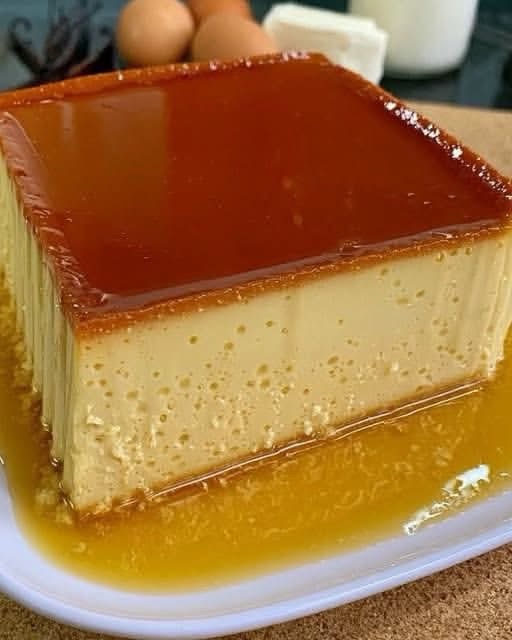
The magic of a good caramel flan recipe comes from its texture. When baked gently in a water bath, the custard cooks slowly and evenly, producing a smooth, creamy consistency without becoming rubbery or grainy. Once chilled and inverted onto a serving plate, the caramel melts into a luxurious sauce that flows over the custard.
This homemade flan is ideal for family dinners, holidays, celebrations, dinner parties, and everyday desserts. It can be prepared ahead of time, which makes it especially convenient when you are entertaining guests.
WHY YOU’LL LOVE THIS CREAMY CARAMEL FLAN
- Silky and creamy: Gentle baking creates a delicate custard texture.
- Rich caramel flavor: Homemade caramel gives the dessert a deep, buttery sweetness.
- Simple ingredients: You only need a handful of basic ingredients.
- Make-ahead friendly: Flan actually benefits from several hours of chilling.
- Beautiful presentation: The glossy caramel sauce makes every slice look elegant.
- Perfect for celebrations: It is impressive enough for holidays and dinner parties.
- Easy to customize: Vanilla, citrus zest, coffee, coconut, and other flavors can be added.
- Naturally gluten-free: The basic recipe does not require flour.
WHAT IS FLAN?
Flan is a baked custard dessert topped with caramel sauce. It is enjoyed in many countries and culinary traditions, with variations found throughout Europe, Latin America, and other parts of the world.
The basic concept is wonderfully simple. Sugar is caramelized and placed in the bottom of a mold. A smooth egg-and-milk custard is poured over the caramel and baked gently until set.
After chilling, the flan is inverted onto a plate. The caramel melts and becomes a sauce that covers the top and sides of the custard.
The result is a dessert that is simultaneously creamy, sweet, rich, and light enough to enjoy after a meal.
CREAMY CARAMEL FLAN AT A GLANCE
- Prep Time: 20 minutes
- Cook Time: 50–60 minutes
- Chilling Time: At least 4 hours
- Total Time: About 5 hours, including chilling
- Servings: 8
- Difficulty: Easy to moderate
- Cooking Temperature: 325°F (165°C)
INGREDIENTS
For the Caramel
- 1 cup granulated sugar
- 2 tablespoons water
For the Custard
- 4 large eggs
- 2 large egg yolks
- 1 can sweetened condensed milk, approximately 14 ounces
- 1 can evaporated milk, approximately 12 ounces
- 2 teaspoons vanilla extract
- Pinch of salt
WHY THESE INGREDIENTS WORK
Every ingredient has an important role in creating the characteristic texture of creamy caramel flan.
EGGS
Eggs provide the structure that allows the liquid custard to set during baking. The proteins coagulate gently in the oven, transforming the mixture from liquid into a soft, sliceable custard.
EGG YOLKS
Additional yolks contribute richness, color, and a particularly smooth texture.
SWEETENED CONDENSED MILK
Sweetened condensed milk adds sweetness and creaminess while making the custard rich and smooth.
EVAPORATED MILK
Evaporated milk contributes a concentrated dairy flavor without adding as much water as regular milk.
VANILLA
Vanilla gives the custard its classic warm aroma.
SALT
A small pinch of salt balances the sweetness and helps the caramel and vanilla flavors stand out.
HOW TO MAKE CREAMY CARAMEL FLAN
STEP 1: PREPARE THE CARAMEL
Place the granulated sugar and water in a medium saucepan.
Heat over medium heat.
Allow the sugar to dissolve without stirring aggressively.
As the mixture heats, the sugar will begin changing from clear to pale golden, then gradually deepen in color.
Watch the caramel carefully because it can go from perfectly golden to burnt very quickly.
STEP 2: COOK THE CARAMEL TO A GOLDEN AMBER COLOR
Continue heating until the caramel becomes a rich golden amber color.
Remove the saucepan from the heat immediately.
Do not wait for the caramel to become extremely dark because residual heat will continue cooking it.
Be extremely careful when handling hot caramel. Melted sugar can cause serious burns.
STEP 3: POUR THE CARAMEL INTO THE MOLD
Immediately pour the hot caramel into a round flan mold, cake pan, or oven-safe baking dish.
Carefully tilt and rotate the dish so the caramel coats the bottom evenly.
Allow the caramel to cool and harden while you prepare the custard.
Do not touch the caramel with your fingers.
WHY DOES CARAMEL HARDEN?
When hot caramel cools, it becomes hard and glass-like.
This is completely normal.
During baking, moisture from the custard and heat from the oven soften the caramel again. After the flan is chilled and inverted, the caramel becomes a smooth sauce that flows over the custard.
STEP 4: PREPARE THE CUSTARD
Place the eggs and egg yolks in a large mixing bowl.
Whisk gently until combined.
Do not whip aggressively.
The goal is to mix the eggs without incorporating a large amount of air.
STEP 5: ADD THE MILKS
Add the sweetened condensed milk and evaporated milk.
Add the vanilla extract and pinch of salt.
Whisk gently until the mixture is completely combined.
Try to avoid creating excessive foam on the surface.
STEP 6: STRAIN THE CUSTARD
For an exceptionally smooth flan, pour the custard mixture through a fine-mesh sieve into another bowl or large measuring jug.
This removes small pieces of egg and helps create a silky final texture.
If foam forms on the surface, allow it to settle or gently skim it away.
STEP 7: POUR THE CUSTARD OVER THE CARAMEL
Slowly pour the custard into the prepared mold.
Pour gently to avoid disturbing the caramel layer.
STEP 8: PREPARE A WATER BATH
Place the flan mold inside a larger roasting pan.
Pour hot water into the roasting pan until it reaches approximately halfway up the sides of the flan mold.
Be careful not to splash water into the custard.
WHY USE A WATER BATH?
A water bath, also called a bain-marie, provides gentle and even heat around the flan.
Custards are sensitive to high temperatures. Direct, intense heat can cause the eggs to overcook, resulting in a firm, rubbery texture or small holes throughout the custard.
The water bath moderates the heat and helps the flan cook gradually.
STEP 9: BAKE THE FLAN
Carefully transfer the water bath to a preheated oven.
Bake at 325°F (165°C) for approximately 50–60 minutes.
The exact baking time will depend on the size and depth of your mold.
The edges should be set while the center still has a gentle wobble.
Do not wait until the center is completely firm in the oven.
HOW TO KNOW WHEN FLAN IS DONE
The center of the flan should have a gentle jiggle when the pan is moved slightly.
It should not look completely liquid, but it should not be completely rigid either.
The custard will continue to firm as it cools.
Overbaking is one of the most common causes of tough or grainy flan, so it is better to remove it once the center is just set.
STEP 10: COOL THE FLAN
Carefully remove the flan from the water bath.
Allow it to cool at room temperature for approximately 30–60 minutes.
Once it has cooled sufficiently, cover it and refrigerate.
STEP 11: CHILL THOROUGHLY
Refrigerate the flan for at least 4 hours.
For the best texture and easiest unmolding, chilling it overnight is even better.
This allows the custard to fully set and gives the caramel time to become a smooth sauce.
STEP 12: UNMOLD THE FLAN
When ready to serve, remove the flan from the refrigerator.
Run a thin knife carefully around the edge of the mold to loosen the custard.
Place a large serving plate upside down over the top of the mold.
Hold the plate and mold firmly together, then quickly invert them.
Lift the mold slowly.
The flan should release, with the caramel sauce flowing over the top.
THE SECRET TO A SILKY SMOOTH FLAN
The biggest secrets are gentle mixing, careful temperature control, and avoiding overbaking.
Whisk the eggs just enough to combine them.
Strain the custard before baking.
Use a water bath.
Bake at a moderate temperature.
Remove the flan when the center still has a gentle wobble.
These small details make a major difference in the finished texture.
HOW TO PREVENT BUBBLES IN FLAN
Large bubbles usually form when too much air is incorporated into the custard.
Whisk gently rather than vigorously.
Do not use an electric mixer unless necessary.
Straining the custard also helps remove bubbles and small particles.
If there is visible foam on top of the custard before baking, gently skim it away.
HOW TO MAKE PERFECT CARAMEL
Caramel can seem intimidating, but the process becomes much easier once you understand the color.
You want a deep golden amber color.
If it is too pale, the caramel may taste primarily sweet rather than deeply caramelized.
If it becomes very dark brown or nearly black, it can taste bitter.
Keep a close eye on the pan during the final stage because caramel can change color extremely quickly.
COMMON CARAMEL MISTAKES
STIRRING TOO MUCH
Excessive stirring can encourage sugar crystals to form.
WALKING AWAY FROM THE PAN
Caramel requires close attention, especially toward the end of cooking.
COOKING IT TOO DARK
Dark caramel can become bitter.
WAITING TOO LONG TO POUR
Caramel hardens quickly after leaving the heat, so pour it into the mold promptly.
TIPS FOR PERFECT CREAMY CARAMEL FLAN
- Use room-temperature ingredients when possible: They combine more easily.
- Whisk gently: Less air means fewer bubbles.
- Strain the custard: This creates an especially smooth texture.
- Use a water bath: It helps prevent overheating.
- Watch the caramel carefully: It can burn quickly.
- Do not overbake: The center should still jiggle slightly.
- Chill thoroughly: Cold flan is easier to unmold.
- Use a thin knife: It helps release the edges cleanly.
- Invert confidently: A quick, controlled motion helps prevent the flan from breaking.
INGREDIENT SUBSTITUTIONS
VANILLA EXTRACT
Vanilla bean paste or the seeds from a vanilla bean can be used instead of vanilla extract.
EVAPORATED MILK
Whole milk can be used if evaporated milk is unavailable, although the final flan may be slightly lighter.
SWEETENED CONDENSED MILK
Traditional flan recipes can also be made with granulated sugar and regular milk, but the texture and sweetness will be different.
FLAVOR VARIATIONS
COFFEE FLAN
Add a small amount of strong brewed espresso or instant espresso powder to the custard for a rich coffee flavor.
COCONUT FLAN
Replace part of the evaporated milk with coconut milk and add shredded coconut if desired.
ORANGE FLAN
Add finely grated orange zest to the custard for a bright citrus variation.
LEMON FLAN
Add finely grated lemon zest for a fresh, aromatic citrus flavor.
CINNAMON FLAN
Add a small amount of ground cinnamon to the custard or infuse the milk with a cinnamon stick.
CHOCOLATE FLAN
Add melted chocolate or unsweetened cocoa powder to create a richer chocolate custard.
HOW TO SERVE CARAMEL FLAN
Flan is traditionally served chilled.
Place a slice on a dessert plate and spoon the caramel sauce over the top.
For a simple presentation, garnish with fresh berries or a small amount of whipped cream.
A dusting of cinnamon can also add a warm aroma.
For a more elegant presentation, serve each slice with a few fresh berries and a small mint leaf.
WHAT TO SERVE WITH FLAN
- Fresh strawberries
- Raspberries
- Blueberries
- Whipped cream
- Fresh fruit
- Lightly toasted coconut
- Fresh mint
- Espresso or coffee
- Black tea
STORAGE INSTRUCTIONS
Keep flan refrigerated in an airtight container or tightly covered with plastic wrap.
It is best enjoyed within approximately 3–4 days.
Because flan is an egg-based custard, it should not be left at room temperature for extended periods.
Keep the flan chilled until you are ready to serve it.
CAN YOU MAKE FLAN AHEAD OF TIME?
Yes. In fact, homemade flan is an excellent make-ahead dessert.
Prepare it the day before serving and allow it to chill overnight.
This gives the custard plenty of time to set and makes unmolding easier.
Making it ahead also means you can focus on your main meal and other preparations when entertaining guests.
CAN YOU FREEZE FLAN?
Flan can technically be frozen, but freezing is not recommended if you want the smoothest possible texture.
The custard may become slightly watery or grainy after thawing.
For the best result, prepare flan one day ahead and store it refrigerated rather than freezing it.
WHY DID MY FLAN CRACK?
Cracks can occur when the custard is overbaked or exposed to excessive heat.
Using a water bath and moderate oven temperature helps prevent this.
Remember that the center should still have a gentle wobble when the flan comes out of the oven.
WHY IS MY FLAN RUBBERY?
A rubbery texture usually indicates that the eggs were cooked too aggressively.
This can happen when the oven temperature is too high or when the flan is baked for too long.
Lower temperatures and a water bath help protect the delicate custard.
WHY IS MY FLAN WATERY?
Watery flan can result from underbaking, insufficient chilling, or excess moisture.
Make sure the custard is properly set before removing it from the oven and refrigerate it for at least 4 hours.
WHY DID MY CARAMEL TURN HARD?
Hard caramel is completely normal before baking.
The caramel softens as the flan cooks and later becomes a sauce when the dessert is inverted.
If the caramel remains very hard after chilling, allow the flan to sit at room temperature for a few minutes before unmolding.
WHY DID MY CARAMEL STICK TO THE PAN?
Some caramel may remain in the bottom of the mold, especially if it has cooled into a hard layer.
Place the bottom of the mold in warm water for a short time to help loosen the caramel.
Be careful not to allow water to enter the custard.
HOW DO I KNOW IF MY CARAMEL IS BURNT?
Burnt caramel usually has a very dark brown or nearly black appearance and a strong bitter smell.
Perfect caramel should smell sweet and toasted and have a rich golden amber color.
FREQUENTLY ASKED QUESTIONS
Can I make flan without a water bath?
It is possible, but a water bath provides much more gentle and even heat and is strongly recommended for the smoothest texture.
Can I use a glass baking dish?
Yes. A suitable oven-safe glass dish can work well. Keep in mind that baking times may vary depending on the depth and material of the dish.
How long should flan chill?
At least 4 hours is recommended. Overnight chilling often produces the best texture and easiest release.
Can I use only whole eggs?
Yes, but the texture will be slightly different. Additional yolks make the custard richer and silkier.
Can I use brown sugar for the caramel?
Yes, although it will create a somewhat deeper, molasses-like flavor and darker color.
Can I make individual flans?
Yes. Divide the caramel and custard among individual ramekins and adjust the baking time according to their size.
Can I make flan without vanilla?
Yes. Vanilla enhances the flavor but is not required for the custard to set.
How do I get clean slices?
Chill the flan thoroughly and use a sharp, thin knife. Wipe the knife between slices for the cleanest presentation.
Can I use a springform pan?
A springform pan is not ideal because the caramel and custard mixture can leak through the seams. A solid-bottom mold is safer.
HOW TO MAKE INDIVIDUAL CARAMEL FLANS
Individual portions are perfect for dinner parties.
Prepare the caramel and divide it among several small ramekins.
Pour the custard evenly into each ramekin.
Place the ramekins in a large roasting pan and carefully add hot water around them.
Bake until the custards are set with a slight wobble in the center.
Cool and refrigerate before unmolding.
HOW TO MAKE FLAN FOR A SPECIAL OCCASION
For holidays and celebrations, prepare the flan the day before.
Leave it chilled in its mold until shortly before dessert is served.
Invert it onto a large serving platter and decorate the plate with fresh berries.
The glossy caramel sauce naturally creates an elegant finish without requiring complicated decoration.
HOW TO MAKE THE FLAN EXTRA CREAMY
Use the full amount of egg yolks specified in the recipe and avoid overbaking.
The biggest factor in creamy texture is gentle cooking.
Straining the custard before baking also removes small particles and contributes to a smoother final result.
HOW TO AVOID A STRONG EGG FLAVOR
A strong egg flavor usually comes from overcooking.
Use moderate heat, bake in a water bath, and remove the flan as soon as the center is gently set.
Vanilla also helps create a pleasant aroma that complements the eggs and dairy.
HOW TO MAKE THE CARAMEL MORE INTENSE
Cook the sugar until it reaches a deeper amber color, but stop before it becomes very dark.
A slightly darker caramel provides a more complex toasted flavor.
Watch it carefully during the final moments because the difference between deep caramel and burnt sugar can happen very quickly.
HOW TO UNMOLD FLAN WITHOUT BREAKING IT
Make sure the flan is thoroughly chilled.
Run a thin knife around the edges.
Place the serving plate securely over the mold.
Invert the plate and mold in one confident movement.
Wait a few seconds before lifting the mold.
If the flan does not release immediately, gently tap the sides of the mold or warm the bottom very briefly.
THE BEST TEMPERATURE FOR SERVING FLAN
Flan is generally best served chilled or slightly cool.
Remove it from the refrigerator shortly before serving.
Allowing it to sit for a few minutes can make the texture feel even creamier while keeping the custard firm enough to hold its shape.
WHY FLAN IS A GREAT MAKE-AHEAD DESSERT
Unlike cakes and pastries that may need to be assembled shortly before serving, flan actually benefits from resting in the refrigerator.
The custard becomes firmer and easier to slice, while the caramel develops into a glossy sauce.
This makes it especially useful for holidays and dinner parties when you want dessert finished before guests arrive.
FINAL THOUGHTS
Creamy Caramel Flan is a timeless dessert that combines simple ingredients with classic pastry technique to create something incredibly elegant. The silky custard, fragrant vanilla, and deep golden caramel sauce complement one another perfectly.
The most important secrets are gentle mixing, careful caramel preparation, a properly controlled water bath, and avoiding overbaking. Once the flan is chilled and inverted, the caramel transforms into a glossy sauce that makes the dessert as beautiful as it is delicious.
Whether you serve it after a family dinner, prepare individual portions for guests, or make a large flan for a holiday celebration, this homemade caramel flan is a reliable dessert that can be prepared ahead and enjoyed cold.
Keep the presentation simple with fresh berries, whipped cream, or a light dusting of cinnamon. The caramel-covered custard is already beautiful enough to stand on its own.
With its smooth texture, rich caramel flavor, and elegant appearance, this creamy caramel flan recipe deserves a regular place in your dessert collection.